About elisek

Hello and welcome to our Meet the Team series, in which we aim to give you deeper insight into the minds and personalities of those who make up this eclectic, close-knit group. We are developers, marketers, and technical support engineers, and at work we craft everything from Microsoft reporting APIs to mobile email applications. And outside of work? Let’s just say racing against the machine during hackathons, building architecturally sound beer towers during retros, and paddling down the Charles during the warmer months are simply the beginning.

Meet the Team: Mike

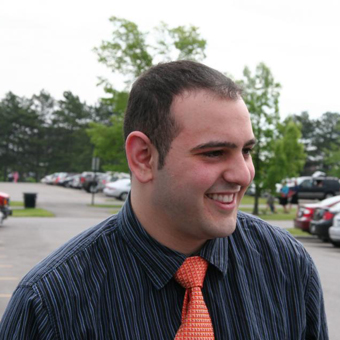
Meet Mike, our QA Engineer. Drumming on his down time, ensuring product quality for our sister company Riparian Data, and harboring a soft spot for pugs.

1. What do you do?

I’m the QA Engineer for Riparian Data. While the role touches a lot of areas, at its most basic level it means that no change is allowed into our product until I’ve had a chance to thoroughly vet it and ensure that it doesn’t affect our product’s quality. Oh, and preferably those changes should work as designed too.

2. What are you listening to right now?

At the moment I’m listening to the new National album on Spotify. 

3. If you could build any app, what would it be and why?

I’ve always wanted an app that you could play a song into and it would spit back accurate drum tablature. When I was a kid I used to spend hours writing out the drum notation for songs I wanted to learn, and I don’t feel like anybody has released an app to make that experience any easier.

4. When you were 5 what did you want to be and why?

At that point I still had designs to be a professional baseball player. While I think modern day sabermetrics would appreciate my adept skill at being hit by pitches, it didn’t necessarily translate over into any success during my little league days.

5. What is your favorite tech blog and why? Continue reading


Best of Watertown 2013

We are so honored (not to mention pumped) to be recognized in the Watertown Award Program this year. Thank you!

“The Watertown Award Program recognizes outstanding local businesses that serve their local market. Each year, we identify companies that we believe have achieved exceptional marketing success in their local community and business category. These are local companies that enhance the positive image of small business through service to their customers and community.

Press Release

FOR IMMEDIATE RELEASE

Software Artisans Receives 2013 Best of Watertown Award

Watertown Award Program Honors the Achievement

WATERTOWN June 6, 2013 — Software Artisans has been selected for the 2013 Best of Watertown Award in the Retail Computer Software category by the Watertown Award Program.

Each year, the Watertown Award Program identifies companies that we believe have achieved exceptional marketing success in their local community and business category. These are local companies that enhance the positive image of small business through service to their customers and our community. These exceptional companies help make the Watertown area a great place to live, work and play.

Various sources of information were gathered and analyzed to choose the winners in each category. The 2013 Watertown Award Program focuses on quality, not quantity. Winners are determined based on the information gathered both internally by the Watertown Award Program and data provided by third parties.

About Watertown Award Program Continue reading


Photo Credit: Mashable.com

I suppose I shouldn’t say, “Welcome back, privacy concerns,” as I’m sure they never left, just quietly assumed their position humming in the background and shadows of the internet noise. This week, however, they took center stage both in the healthcare space and in government news.

This week, The New York Times published an article on a significant announcement for the healthcare industry. A group of global partners spanning 41 countries and including 70 medical, research and advocacy organizations agreed to share a heap of genetic data. “Their aim is to put the vast and growing trove of data on genetic variations and health into databases that would open to researchers and doctors all over the world, not just to those who created them,” The New York Times wrote. Currently, research labs and facilities are very much siloed. Each institution has their own research within their own walls and with their own records and system of operations. There is no universal method for representing and sharing genetic data, which could lead to advanced findings in cures and other health-related research.

One reason for the lack of a central system is the sheer volume of data. There is just too much information being produced by the minute. Not only that, but it is often unstructured and not of quality (meaning information was entered or gathered incorrectly/differently, such as January being entered in as Jan, 1, 01, or January, making it difficult to analyze). While volume and quality of data is an issue, the overarching problem, or rather challenge, healthcare professionals face lies mostly in the security space. With all of that sensitive patient data, there need to be strict, infallible measures to protect that information. Along those same lines is the question of who will have access to that information.

This is especially significant as it comes at the same time of privacy concerns regarding the NSA’s reported access to granular consumer data. Continue reading


Joan Rivers

Digital Cities PanelA whirlwind week of panels, classroom discussions, and events is the only way to describe Internet Week NY. Bringing together masterminds behind the digital space, Internet Week NY covered how companies from startups to non-profits to corporations like MLB are harnessing the power of online personalities to market their brand and really integrate customers into their brand experience. Much like the internet itself (and was discussed by several panels), there was much “noise” or information to sift through. While valuable, it can be overwhelming. Thus, I wanted to provide a general guide with the most helpful info. While I’m tempted to talk about famous celebrities, Joan Rivers and Erica Oyama, I’ll save those and my favorite classes for later discussions. For now, I’ll attempt to boil down the overarching themes that wove the conference together and overlapped all of the different industries (from fashion to food to sports) taking over the digital arena. For all of the entrepreneurs, advertisers, and marketers out there, these are the key takeaways of which to make note.

Key Takeaways from Internet Week NY:

  • Humanize your brand - Social media and the internet in general allow for a more personalized customer experience. Not only that, they allow for customers to have an active involvement with your brand. People buy from people.
  • Encourage customer involvement with your brand – In other words, create experiences that involve people with your brand, such as holding contests, recognizing fans, and providing people the ability to vote on different elements of your brand. (Fun fact: People like their name and their voice. A representative from USA Mini Cooper and a panel speaker for a crowdfunding class both touched on this. USA Mini Cooper found out people liked to name their cars, so they had a contest where people could name the next Mini Cooper. Continue reading

Our weekly Truth in Tech series, where we cover the week’s wackiest, useful, and just downright interesting tech stories, is now available for download on itunes…for free. We sift through a ton of tech news on the daily. Usually we tweet about our findings, but 140 characters doesn’t leave room for much nuance. So buckle up, tune in, and join us as we uncover acquisitions, startups, apps and the ever-evolving tech landscape.

*If the above do not load, you can access the podcasts from the SoundCloud website: Truth in Tech Ep. 14: Hacked and Truth in Tech Ep. 15: The Path Less Taken.

Summary:

Truth in Tech Ep. 15: The Path Less Taken

Your plumber called. He wants to know about those photos you have to share. The capped social network beloved by designers and San Francisco technorati alike has come under a second round of fire for its spammy adoption practices. On Monday Continue reading


Thank you to all who attended the Boston Strong BBQ last week. We had a wonderful time getting to know our Watertown neighbors, while eating delicious food and supporting a great cause. With your help, we were able to raise $350 for the Lutheran Church Charities K-9 Comfort Dogs. We were excited by the strong turnout – from students at the Harvard Business School to our next-door businesses at Air Graphics and Sasaki to those who simply saw the sign and flyers and decided to stop by. Thank you again for coming out to support a wonderful cause and share in the strength and pride of our city. We’re looking forward to more Watertown BBQs and community events over the summer.

For the full photo album visit our Facebook page and feel free to tag yourself. To read the Watertown Tab’s write-up of the event visit their site here: Watertown Companies Team Up to Comfort Community


In light of recent events, we want to bring our community of Watertown together and share in the strength and pride of our town. Next Friday, May 3rd, we will be hosting a BBQ to benefit the K-9 Comfort Dogs, who traveled from Chicago and Newtown, CT to be with us here in Boston.

The K-9 Comfort dogs are a bundle of furry, affectionate Golden Retrievers, trained to provide comfort and care to those affected by tragedy. They were stationed at First Lutheran Church on Berekeley St. after the bombings and went around to the hospitals to visit those affected. They also provided much comfort to one of our employees, who ran the Boston Marathon. As such, they are a cause very close to our hearts. So stop by, grab some food, meet your Watertown neighbors, and support a good cause. We are one Boston.

When: Friday, May 3rd, 12pm – 2pm EST

Where:
SoftArtisans / Riparian Data HQ
3 Brook St.
Watertown, MA 02472
RSVP: http://BostonStrongBBQ.eventbrite.com

Can’t make it, but still feel like donating? You can do so here: LCC Comfort Dogs

SoftArtisans
3 Brook St.
Watertown, MA, 02472
6176078800


View Larger Map

Last week, our home was invaded, our safety threatened. We’re still trying to process and heal, but we take comfort in knowing the strength and pride of this city, this place, this town.

We want to express our complete and sincere gratitude to the military personnel, Boston PD, and government agencies who spent countless, sleepless hours to ensure the safety of our residents and give our city peace of mind. For that we are extremely grateful. We also want to express our gratitude to the cities globally who showed their support for our city.

Our hearts, thoughts, and prayers are with those who lost their lives, are healing in the hospitals, and those grieving from these events. We’re not there yet, but we’re rebuilding, we’re healing, we’re finding our new set of normalcy. We could not be more proud of the heroic efforts of the police, military personnel and Bostonians alike, and to have the privilege to call this city home. We are Boston. We are Boston Strong.

BostonStrongSARD


[Stories from the Women in Tech Trenches is a series of posts exploring the personal stories of real women in technology. Every woman in tech overcame, at the very least, statistical odds to be here; this blog series aims to find out why, and what they found along the way. This week we met up with Wendy Neal, belovedly known in the SharePoint community as SharePointWendyIf reading her story inspires you to share yours, please email me.]

Wendy

I started my career as a web developer, and when my current company brought SharePoint into the organization in 2007, I was completely hooked. I like to blog about my SharePoint experiences, and enjoy speaking at user groups and conferences to share what I’ve learned over the years.

1. Can you take us back to your “eureka!” moment—a particular instance or event that got you interested in technology?

I’m not sure there was one single moment where the light bulb turned on and I realized I wanted to pursue a career in technology.  I do remember taking a BASIC computer programming class in high school and thinking it was kind of neat.  I even wrote a couple simple video games for fun.

It wasn’t until I was working as an office manager for a small electronics company in the mid ‘90s that I realized I really enjoyed working with computers, and more specifically, creating websites after I built the local office website.  The whole Internet thing was brand new, and it fascinated me.

I knew I wanted to create websites, however I didn’t have a bachelor’s degree, so I wasn’t getting any job offers. I decided to go back to college to finish my degree. I declared my major to be Computer Science and attended school part time for the next 3 years while working full time until I obtained my degree.

2. Growing up, did you have any preconceived perceptions of the tech world and the kinds of people who lived in it?

I don’t think I had many preconceived notions about the world in general back then. I grew up in a small town in rural Iowa and probably had no idea what was going on in the world around me. I only knew a couple people who worked in the technology field and I had no idea what they did. Besides, I was too busy planning my career as a professional football player (in elementary school), and after that I wanted to be a pro beach volleyball player (high school).

These were also the pre-internet days, and my family didn’t even have cable TV until I was in high school.  The fact that I didn’t know any better was probably one of the reasons why I didn’t have any reservations about pursuing a career in technology once I finally realized that was the direction I wanted to go.  I just decided that’s what I wanted to do and I did it.

3. As a SharePoint architect, reputed speaker, and evangelist, what led you to this career path? When did you first start working with tech? Was it by choice?

My first job upon graduating college was working as a web developer for a company that provided clients with stock market web sites and solutions.  I loved it!  I worked with Microsoft’s classic ASP and also did a little SQL and JavaScript programming, then moved to ASP.Net when that first came out.  After four years at that company, we got purchased by another firm and they closed the office that I worked at. 

I then started working for my current employer, GreatAmerica Financial Services, starting as a Microsoft .Net software developer, then gradually moving into the world of SharePoint Development.  Eventually I was doing nothing but SharePoint-related work on a daily basis, including development, branding, administration, and even training our users.

I became heavily involved in the SharePoint Community in the summer of 2011.  The people I had admired from afar up to that point, who gave their time endlessly, really inspired me.  I wanted to give back and help others like those who have helped me over the years; so I started a blog, which led to writing articles for prominent SharePoint sites like NothingButSharePoint.com, and then to speaking at user groups and conferences.  I’m even currently working on an upcoming jQuery and SharePoint book.

4. Did you experience any personal or systemic setbacks at any point of your academic or professional career?

It seemed I had always had weird health issues off and on since I was a teenager that no medical doctor could ever diagnose. In the fall of 2009 my symptoms manifested, and I became very ill and missed about a month of work. I had never felt so horrible in my life. I think it was by sheer will and my fear of hospitals that I forced myself to start eating and slowly regained my strength. Thanks to a wonderful naturopathic physician I was finally diagnosed with multiple food allergies and hypothyroidism. Now, with a simple change in diet to eliminate my food allergens, and a few natural supplements to control my hypothyroidism, I feel like a new person.

I also feel that being physically and mentally healthy for the first time in so many years opened new doors for me.  It boosted my confidence levels and allowed me to venture down the road of public speaking.  I felt like I could try new things and not have to worry about canceling plans or backing out at the last minute for feeling sick.

5. Whom do you look to as mentors and/or sources of inspiration?

One of the people I admire most is my late Aunt Wanda. She fought various forms of cancer for over 17 years, eventually succumbing to the disease in 2000.  Many times she was told by doctors that she only had months to live, and she fought to stay alive each time. And she did it all with a positive attitude; I never saw her in a bad mood, no matter how miserable she was feeling due to her illness and treatments.  It has taught me that the mind is very powerful, and that you can literally do anything if you set your mind to it. Even when people tell you otherwise, if you believe then you can.

6. Why do you think the rate of attrition for women in software engineering is higher than that of women in most other tech fields?

I think it’s because the ratio of women to men working in the software engineering field is extremely low, even lower than some of the other tech fields. For example, I’m the only female on our team of eight developers. I think a young woman starting out in this scenario can feel isolated and alone at times. If she has no female mentors or role models to look up to, she may feel stuck as far as understanding how she can advance her career. Often times a man will get promoted after he saves the day or performs some other heroic feat for the company. Women, on the other hand, have a fear that if they make a mistake they’ll be demoted or devalued, so they build systems that don’t crash in the first place. This is great; however, they rarely get recognized for that fact, which can leave them feeling unappreciated and unnoticed when promotion time comes around.

7. Do you have any suggestions for how to get more girls interested in computers and computer science? Is this important to you?

I think there may be a misconception among girls that all careers in computer science are either hard or boring or that computers are just for geeks.  If girls knew that there were many opportunities out there besides the perceived “geeky” jobs like programming, it may open their minds to the computer science field.

I think education and mentorship at a young age are the key to getting more girls interested in technology.  In my opinion all girls should take an intro to computer programming or engineering course in high school.  They may realize it’s not quite what they thought it was.

8. Do you have any advice for women interested in computers and computer science? Is this important to you?

I’d say go for it, and don’t let anyone hold you back!  Don’t listen to the naysayers, and just do it if that’s what you love. The technology field definitely needs more women, because they bring a unique perspective and diversity to the workplace. Women are typically good at multitasking and relationship building, and having more women in the industry also brings more viewpoints to the table. Hopefully companies are recognizing this and trying to recruit more women into computer and technology roles.

9. Do you have anything to add that you haven’t had a chance to mention?

Don’t be intimidated by the possibility of working in a “man’s world.”  Especially if you want to be a developer. You will likely be one of a few women, if not the only one, working on a team of men. Be comfortable with that. Don’t be afraid to speak your mind and hold true to your convictions when you think you’re right. Your coworkers will respect you for that. And if they don’t, then you’re probably working for the wrong company. Find a company that has integrity and supports a diverse work culture, or start your own.